OEM and Private Label Options — Low Nic Light Users Wholesale
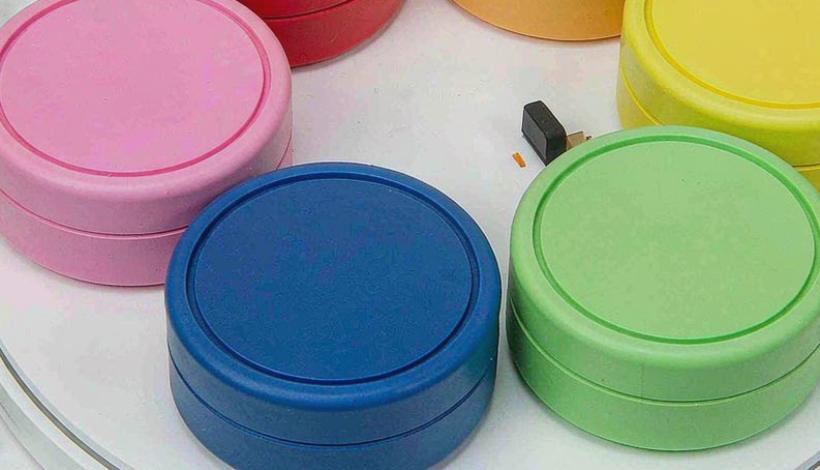
travel retail operators ordering Low Nic Pods for Light Users usually care about three things — consistency, timing and margin. Everything below is organised around protecting those three, in roughly the order they come up during a real order.
Choosing Between Air, Sea and Express
Sea freight suits planned Low Nic Pods for Light Users volume, air suits genuine urgency, and express suits samples and small top-ups. Matching the mode to the reason, rather than to the deadline panic, is what keeps freight spend proportionate.
For Low Nic Pods for Light Users, the break-even between air and sea is mostly about how long your cash is tied up and how quickly the stock turns. Fast-moving lines can justify air; slow ones almost never can.
Packaging, Labelling and Shelf Readiness
Retail-ready packaging changes the economics of Low Nic Pods for Light Users more than most buyers expect. Barcodes, language variants and warning statements vary by destination, and fixing them after production means relabelling by hand. Confirm the artwork requirements for your market before the run starts.
Shelf presentation is where Low Nic Pods for Light Users either sells or sits. Carton dimensions, facing count and how quickly a shopper can read the flavour all affect turnover. If the packaging only works in a warehouse, you have pushed that cost onto the retailer.
Labelling rules move, and Low Nic Pods for Light Users is no exception. Build a habit of confirming the current requirement for each destination at the point of order rather than reusing last year's artwork file. The cost of a reprint is small; the cost of a detained shipment is not.

Minimum Order Quantities and Carton Planning
Carton planning decides whether Low Nic Pods for Light Users arrives in a condition you can sell. Under-filled cartons deform in transit; over-filled ones split at the seams. Aim for a fill that leaves the carton rigid without compressing the product, and check the stacking height against your pallet pattern.
Plan Low Nic Pods for Light Users cartons around how the goods will actually be handled: how many times they are transferred, what the last leg looks like, and whether the carton will be opened for inspection. Those answers matter more to damage rates than the carton grade on paper.
After-Sales, Warranty and Spare Parts
Clarify what happens after Low Nic Pods for Light Users arrives. A written agreement on how defects are credited, how quickly claims are settled, and who pays for return freight is worth more than a friendly promise made during negotiation.
Set the claim window for Low Nic Pods for Light Users in writing — how many days after arrival you can report an issue and what evidence is needed. Clear terms on both sides make the rare dispute quick to resolve.
Spare parts availability is easy to overlook on Low Nic Pods for Light Users and painful to discover later. Ask which components are stocked, how long they are supported, and what the minimum order is for a parts-only shipment.
| Check Point | Method | Acceptance Criteria |
|---|---|---|
| Carton count | Physical count | Must match the packing list exactly |
| Appearance | Random sampling | Defect rate below the agreed threshold |
| Function check | Sampled units | Consistent with the approved sample |
| Packaging integrity | Drop and seal check | No deformation at arrival |
Building A Repeatable Replenishment Cycle
A repeatable cycle for Low Nic Pods for Light Users has three inputs: weekly sell-through, lead time and buffer. Once those are written down, reordering becomes a routine task instead of a decision, and routine tasks are the ones that actually happen.
Most importers of Low Nic Pods for Light Users who move to a fixed monthly cycle report the same benefit: fewer emergencies. The total volume ordered barely changes, but the number of urgent shipments drops sharply.
Margin Maths for Retailers
Margin on Low Nic Pods for Light Users is decided at the purchase stage. Landed cost per sellable unit, not unit price, is the number that matters — and it includes freight, duty, shrinkage and the small percentage that never sells at full price.
A useful exercise with Low Nic Pods for Light Users: calculate what a 15 percent improvement in landed cost does to annual profit, and compare that with what a 15 percent price increase does. The first is usually easier and does not risk volume.
Retailers who track Low Nic Pods for Light Users by margin per shelf metre rather than margin per unit consistently make better range decisions. The product that earns slightly less per unit but turns twice as fast is usually the better use of the space.
What Low Nic Pods for Light Users Actually Covers
Before comparing prices, it helps to agree on what counts as Low Nic Pods for Light Users. In day-to-day trade the term covers a fairly wide band of products, and two suppliers can quote very different things under the same label. Ask for a specification sheet that lists materials, dimensions and what is included in each unit, then compare that against what actually arrives in the carton.
Scope is the first thing to pin down with Low Nic Pods for Light Users. Hardware, consumables and packaging are often bundled differently depending on the factory, so a low unit price can quietly hide a higher landed cost. A one-page specification agreed before sampling removes most of that ambiguity.
- Confirm labelling rules for the destination at order time
- Book inspection while there is still time to rework
- Keep a reorder calendar instead of reacting to stockouts
- Request the full document set during production
- Compare landed cost, not headline unit price
Whether you need a single carton to test or a container to fill a season, the process for Low Nic Pods for Light Users is the same. Reach out with your requirements and we will respond with specifics rather than a brochure.
Frequently asked questions
Can different variants of Low Nic Pods for Light Users be mixed in one carton?
Mixed cartons are usually possible and are a good option when you are testing a range or working below a per-variant minimum. There is normally a small packing surcharge, which we will show on the quotation.
Can you handle repeat or scheduled Low Nic Pods for Light Users orders?
Yes, and it suits both sides. A scheduled cycle lets us reserve production capacity, which shortens lead times and makes pricing more stable than ad-hoc ordering.
How long does a Low Nic Pods for Light Users order take to arrive?
Production for Low Nic Pods for Light Users commonly runs two to four weeks depending on specification and packaging, with transit added on top. Sea freight adds several weeks, air considerably less. We quote a realistic window rather than a best case.
How do I know the Low Nic Pods for Light Users I reorder will match the last batch?
We keep the approved specification and sample reference on file for every order and check against it at inspection. If a component changes, you hear about it before production rather than at delivery.
What happens if a Low Nic Pods for Light Users shipment arrives damaged?
Report it within the agreed window with photographs and carton references and we will work through a credit or replacement. This is much faster when an inspection report exists, which is why we recommend one for larger orders.
Related reading
Talk to us about low nic pods for light users bulk
Send us your target quantity, destination and timing. We answer with real options and a landed cost you can compare — normally within one working day.